I’m interested in how visual “mistakes” generated by algorithms can become emotionally charged once they’re rendered in material form.
Looking back at our group exhibition 'Rendered Reality' we sat down with some of the exhibiting artists to talk about some of the running themes in the exhibition.
How does digital technology influence your creative process, and at what stage does the transition from digital to physical typically occur?
Digital technology is a fundamental tool in my creative process. Since the beginning of my career as an illustrator and designer, I’ve worked extensively with digital programs. I like having tools available for every stage of the process — from the initial idea to the final piece. Even so, I always start with hand-drawn sketches; that gesture remains essential to me.
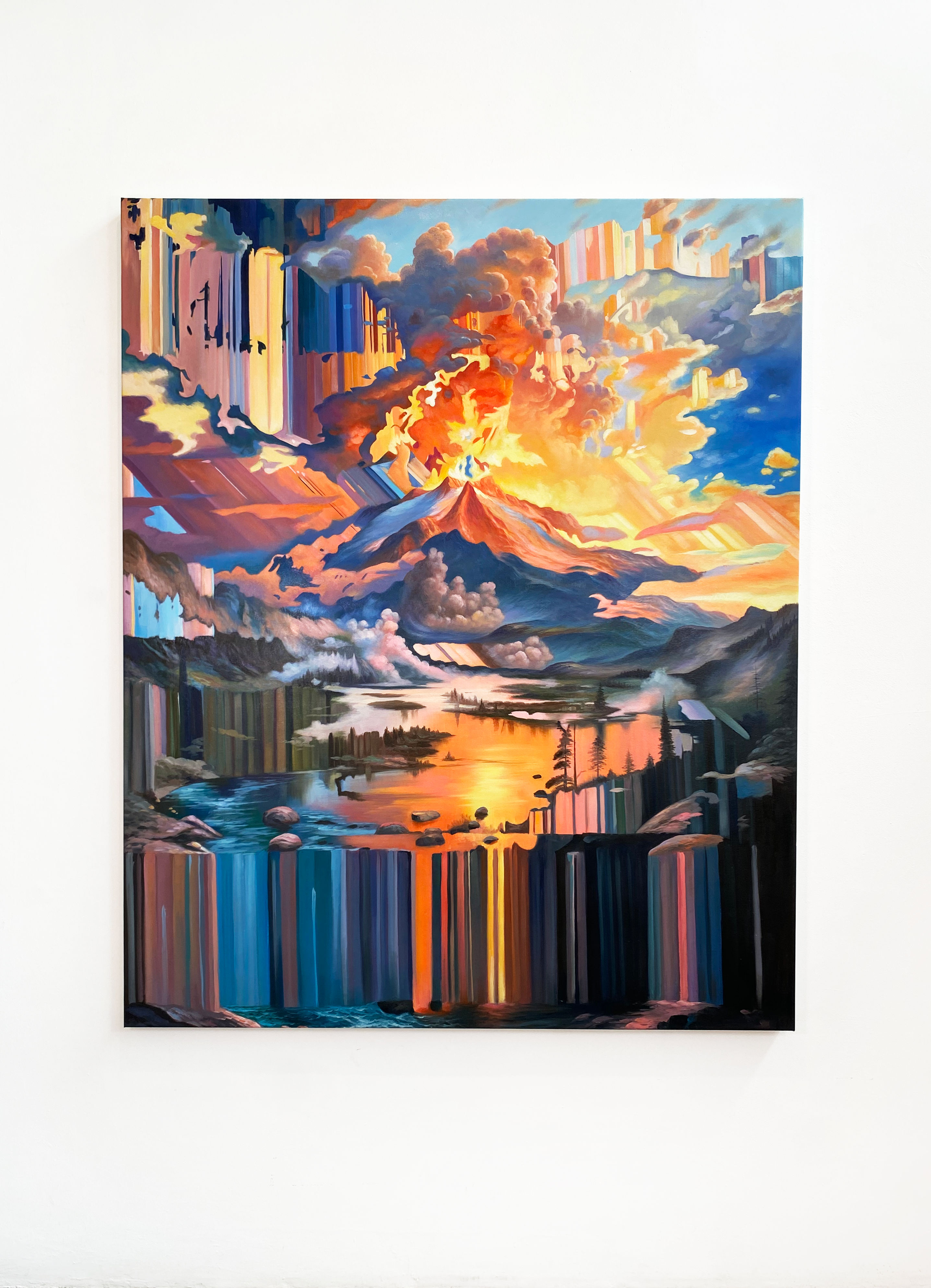
What gives me confidence today is precisely the combination of digital and manual work. I use AI as a starting point — not as an end in itself — to explore visual errors, glitches, and distortions. I digitally manipulate these images until I find something that resonates emotionally or conceptually. That’s when the transition to the physical begins: I turn those visuals into paintings, stained glass, weavings, or sculptures. This isn’t a simple translation — it’s a reinterpretation through matter. Making the image tangible gives it new life, and the act of working with different materials makes this entire process much more exciting.
In what ways do you see your work contributing to or challenging the boundaries between traditional painting and digital aesthetics?
Right now, my creative process is deeply shaped by dream experiences and my relationship with medicinal plants. These experiences generate internal images and narratives — sometimes poems, haikus, or short stories — which I then distill down to a core image or idea. That image is what I feed into AI, using it as a base to begin shaping the visual language.
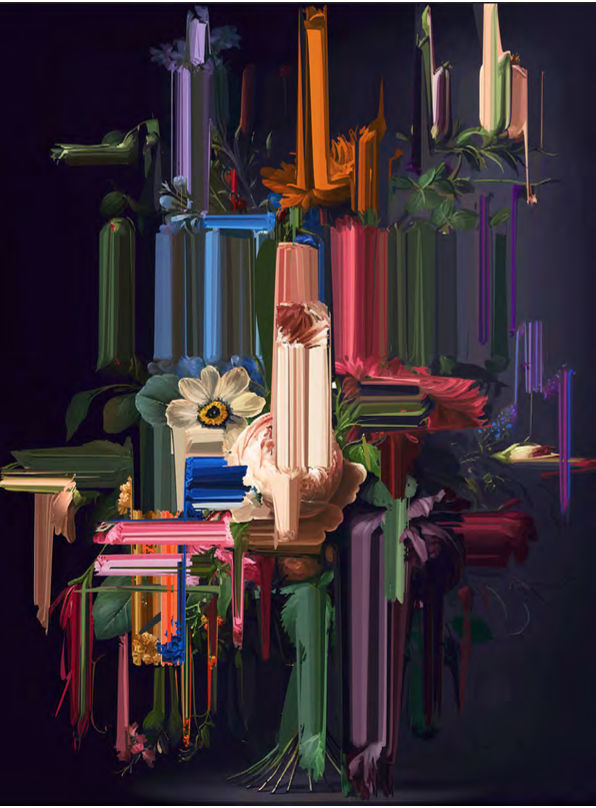
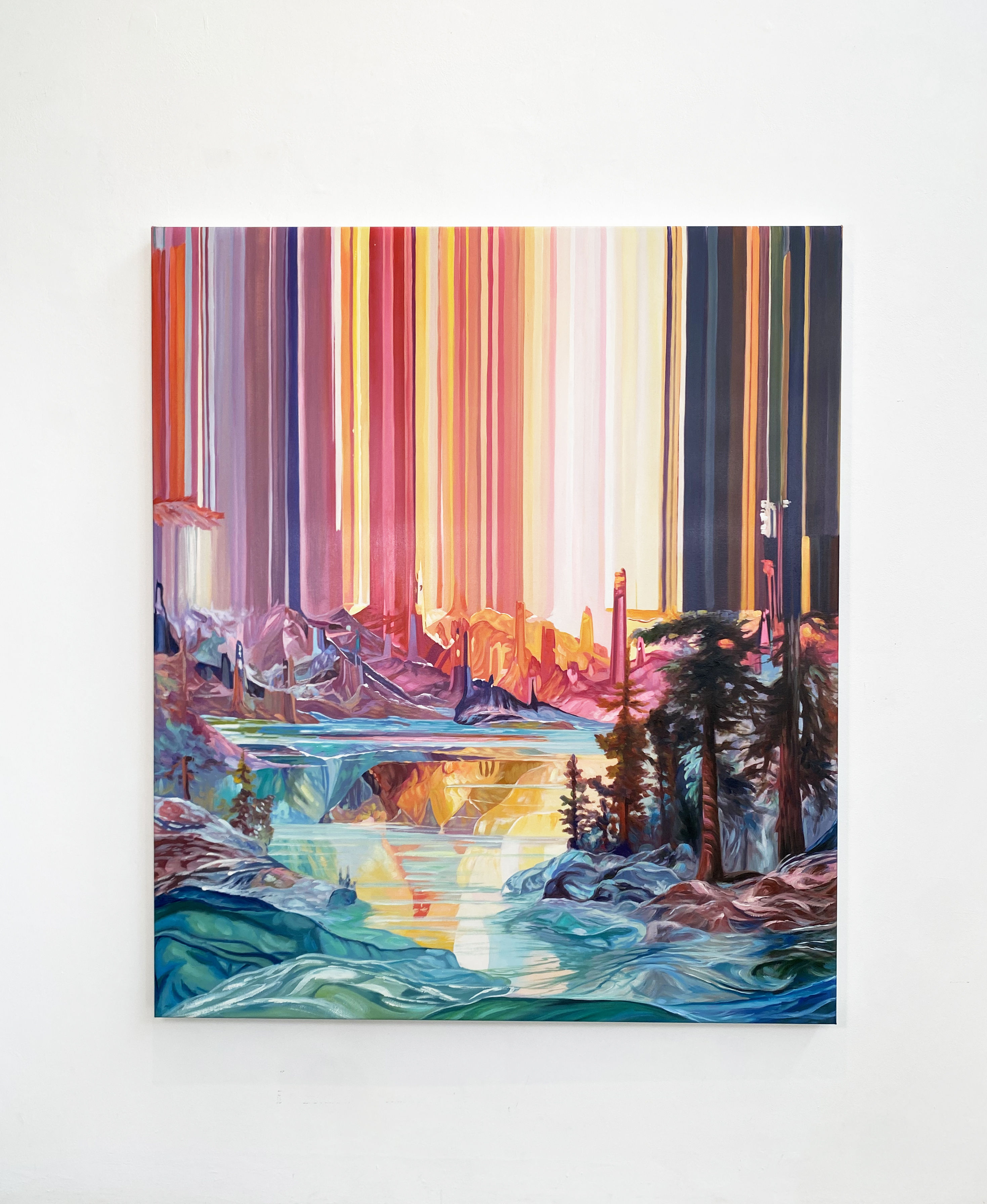
The glitch, the error, the unstable — these are key aesthetics for me. I work with digital results as a starting point and then begin translating them into physical media: painting, stained glass, textiles, sculpture. I’m interested in how visual “mistakes” generated by algorithms can become emotionally charged once they’re rendered in material form. I believe my work challenges and contributes to the dialogue between traditional painting and digital aesthetics by allowing both to coexist and inform each other.
For me, materializing digital images is a way of grounding the virtual in the body. That friction — between the perfection of the machine and the imperfection of the hand — is where the work comes alive.
What does “Rendered Reality” mean to you personally, and how does your work reflect this evolving relationship between the virtual and the tangible world?
I’m especially interested in how the intangible — like a glitch or distortion created by an algorithm — can gain a spiritual or emotional quality when translated into stained glass or tapestry. For me, materializing digital images is a way of grounding the virtual in the body. That friction — between the perfection of the machine and the imperfection of the hand — is where the work comes alive.
What role do you think digital mediums like CGI, 3D, and AI play in reshaping the boundaries of traditional art? Do you see digital media as an extension of traditional craftsmanship or something entirely different?
What interests me most is using these tools from a chaotic, unpredictable place — searching for accidents, glitches, and unexpected outcomes that can trigger new directions. From there, I rework those discoveries in physical form. In that sense, digital media can be a contemporary extension of craftsmanship, offering new ways of working with the hand — even if it’s through the machine.
Do you ever find the limitations of AI frustrating or do they serve as creative constraints in your practice?
I actually find the limitations of AI quite inspiring. Rather than seeing them as obstacles, I treat them as creative constraints — unpredictable boundaries that force me to think differently. When AI produces awkward or unexpected results, I don’t correct them. I embrace those imperfections as entry points into new visual languages.
These limitations often generate the glitches, distortions, or misreadings that have become essential to my aesthetic. They open a space where I can dialogue with the machine — not to perfect an image, but to break it open. From there, I can begin the process of reinterpretation and transformation through physical media. In that way, the AI’s limitations actually enhance the experimental nature of my work.
I see the digital realm as a space of exploration, where ideas can emerge quickly, erratically, and without fear. It’s a kind of sketchbook for the subconscious. But I always return to the material — to the gesture, the weight, the time of making.

How do you personally define your relationship with digital art versus physical art, and how do both inform your identity as an artist
For me, digital and physical art are not separate — they’re deeply interconnected. I see the digital realm as a space of exploration, where ideas can emerge quickly, erratically, and without fear. It’s a kind of sketchbook for the subconscious. But I always return to the material — to the gesture, the weight, the time of making.
The physical translation is where my identity as an artist truly grounds itself. Working with glass, textiles, or paint requires slowness, attention, and care — a kind of presence that balances the speed and abundance of digital tools. This duality is central to who I am: I move between worlds, constantly shifting from imagined to embodied, from coded to crafted.