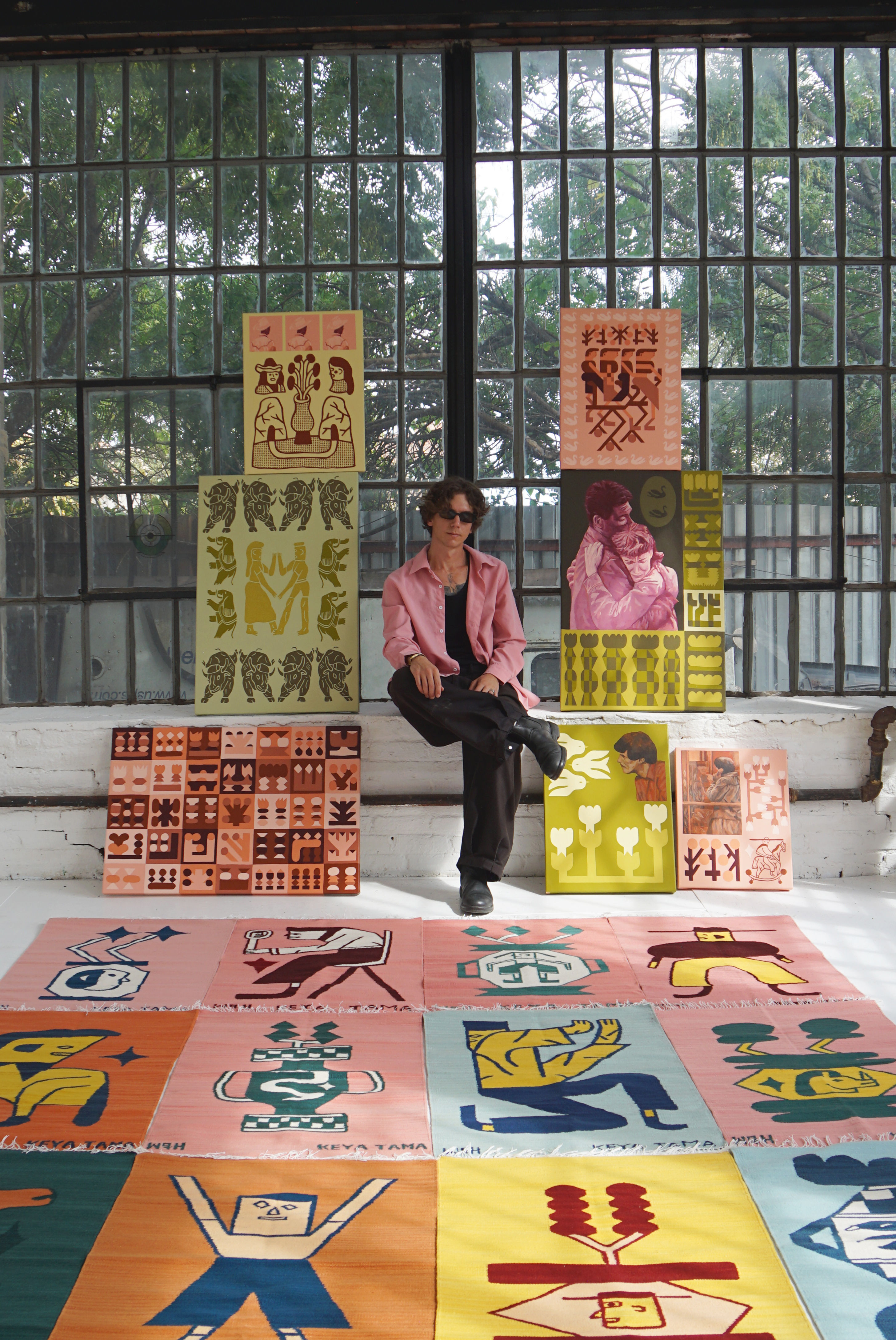
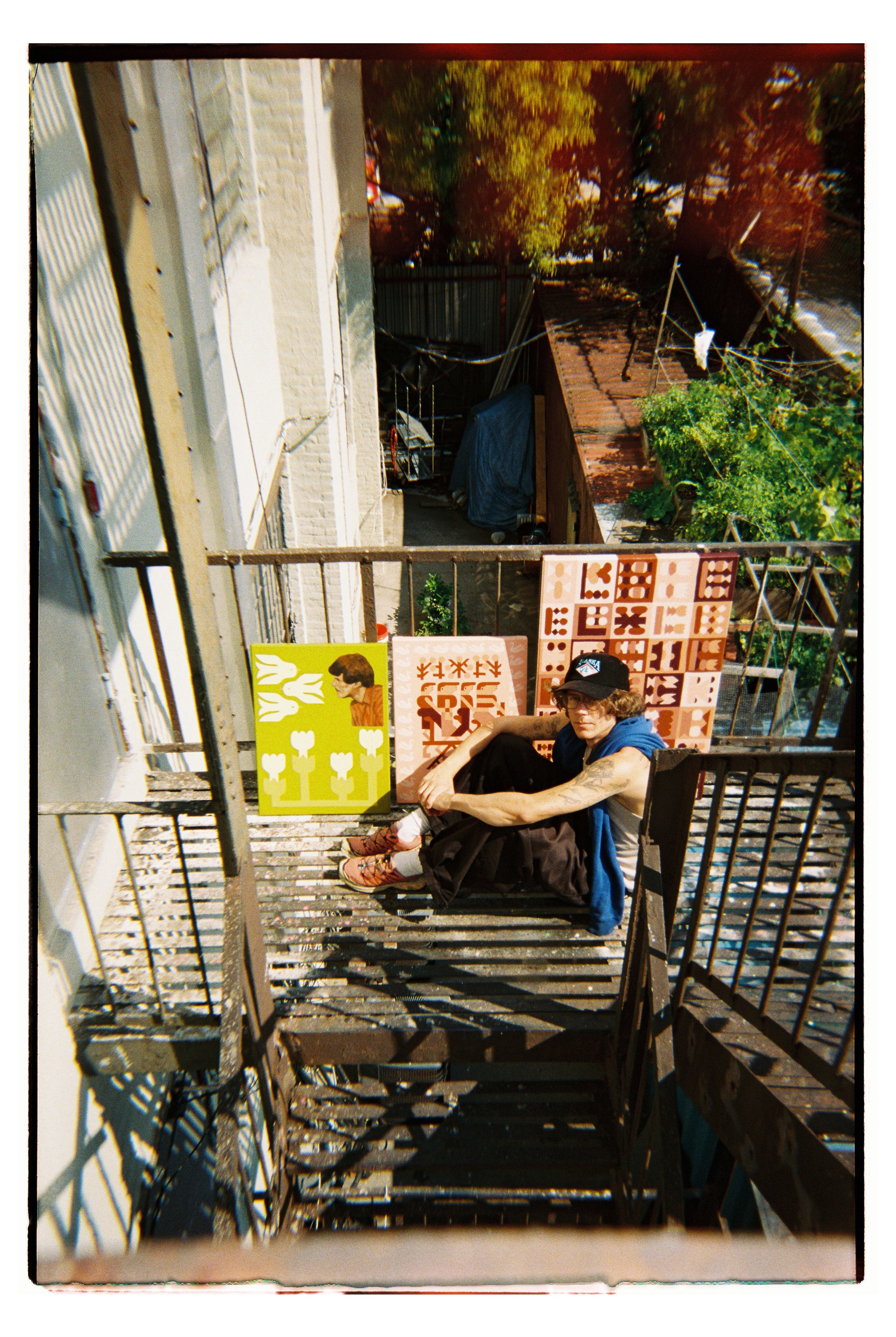
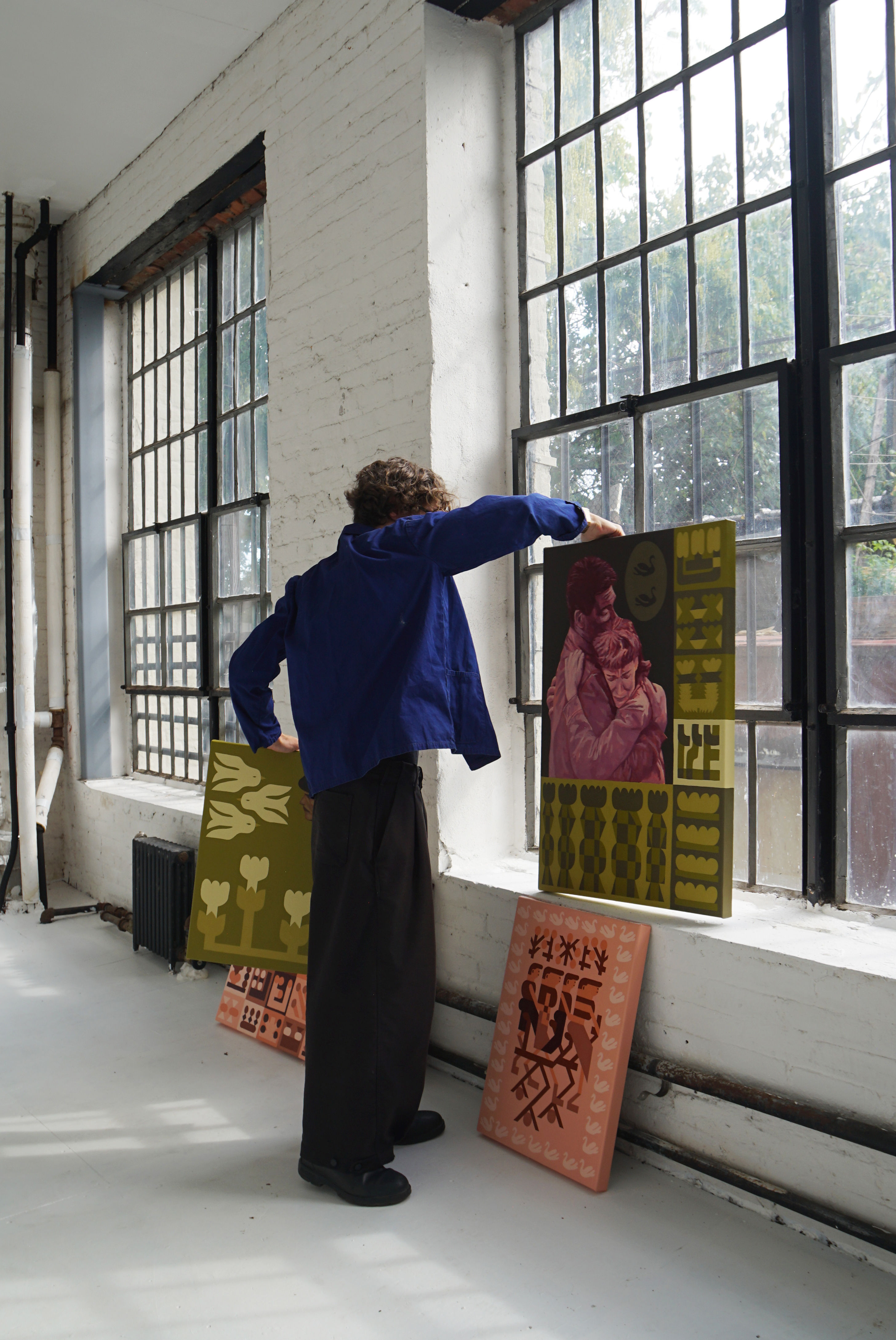
A reflection of his experiences, Keya Tama’s practice unites his heritage and personal allegories with ancient iconographies and modern folklore, to create a body of work that is minimalistic in form yet loaded with symbolism.
Surrounded by art and creativity from the minute he was born, it’s no surprise that Keya Tama was a practicing artist and muralist from a very young age. Influenced by the artistic communities and sub-cultures that his parents, street artist Faith XLVII and tattoo artist Tyler B. Murphy, were part of, Keya had exhibited his own work and published a graphic novel before his thirteenth birthday. From there, he began to develop his own distinct voice, through travelling with his mother, absorbing diverse global influences and engaging with artistic communities across the globe.
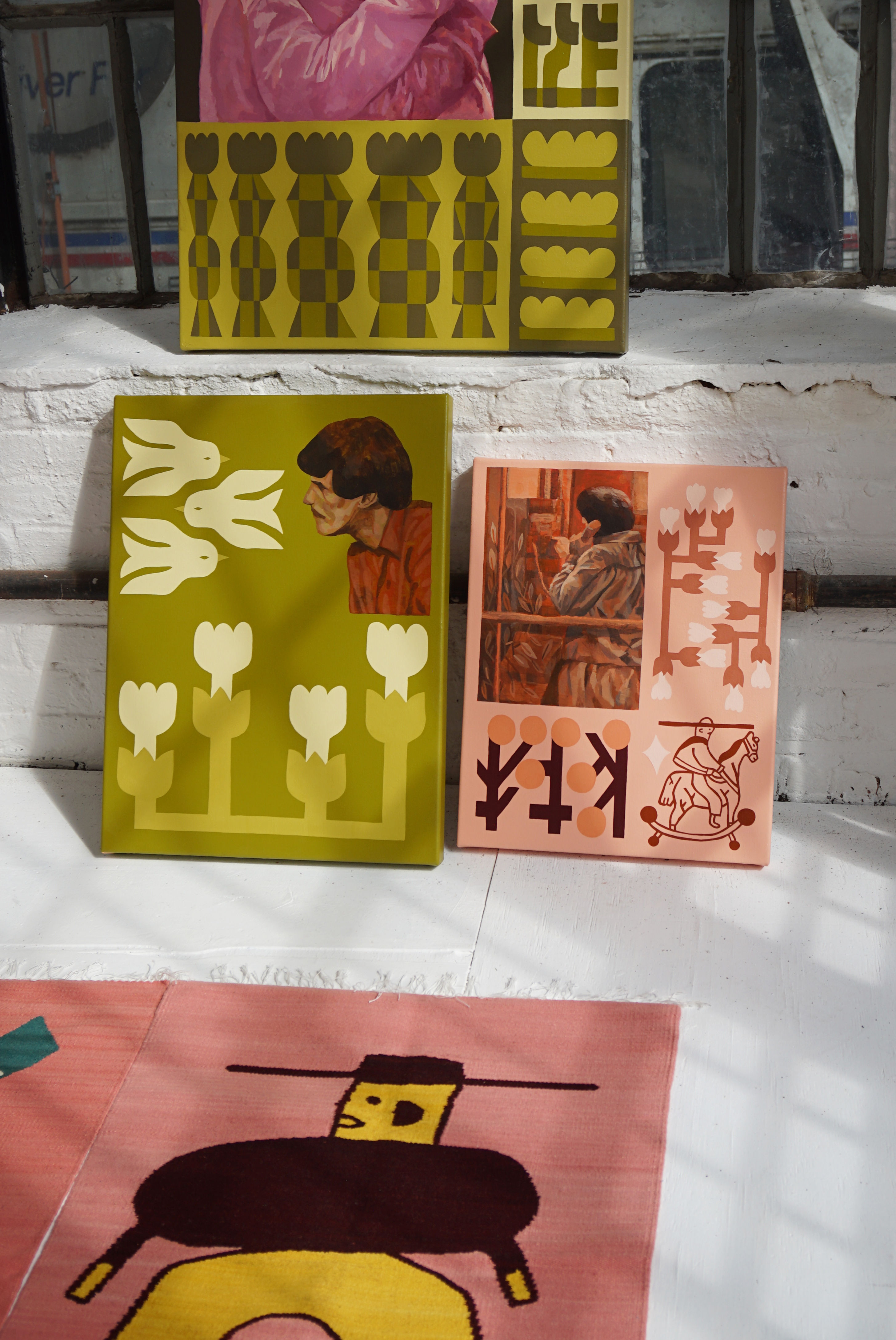
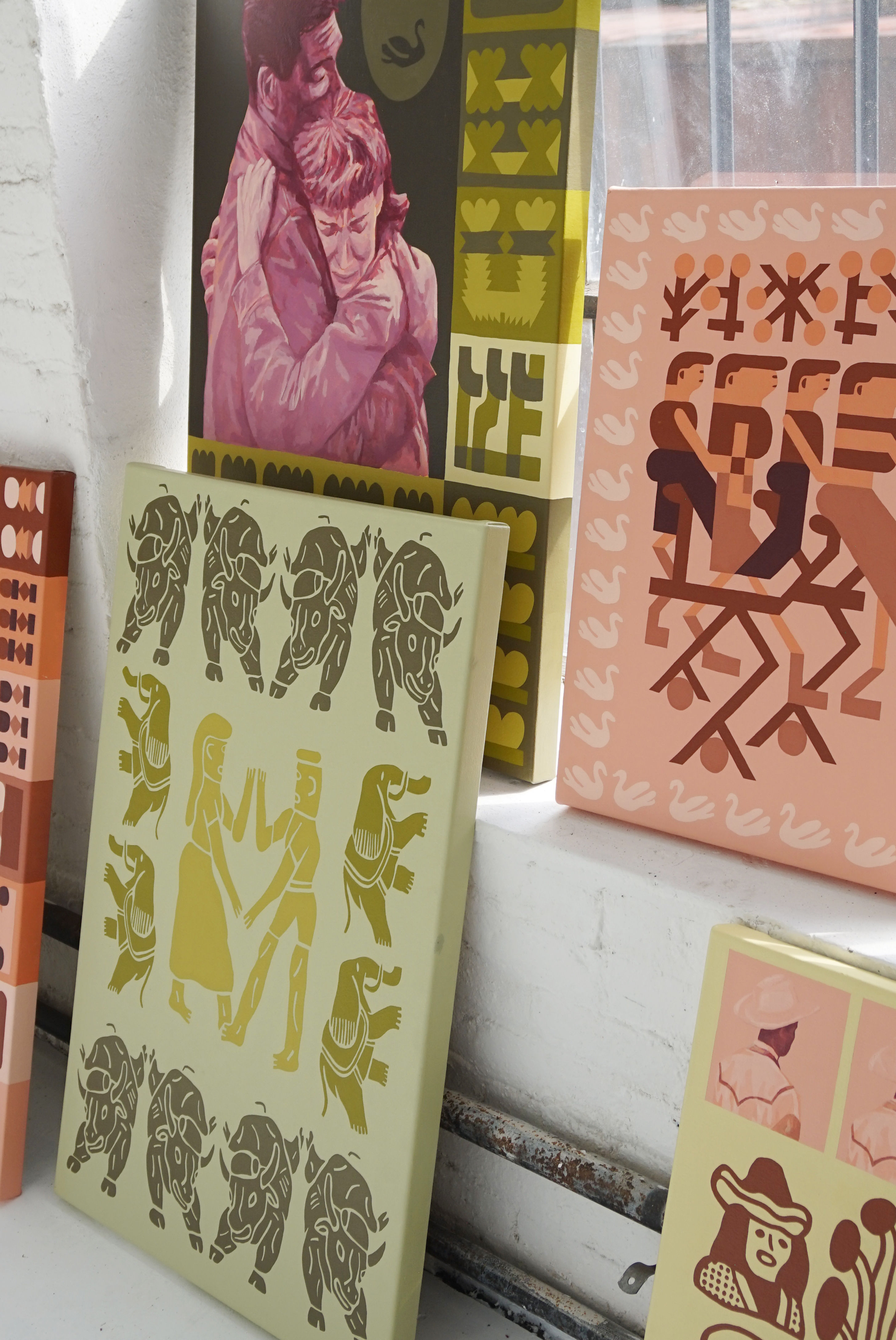
A reflection of his experiences, Keya Tama’s practice unites his heritage and personal allegories with ancient iconographies and modern folklore, to create a body of work that is minimalistic in form yet loaded with symbolism. Using pastel colours and motifs of people, animals and nature to tell stories of past and present, Keya’s work moves beyond personal expression, creating a visual language that maps collective histories, bridges modernity and tradition and explores the universal rhythm of human experience.
The Three Goodbyes explores a journey of departure, confrontation and return. What first inspired you to examine this narrative? What are you trying to communicate with your audience?
The show is very much inspired by a lot of my community in terms of the artists I know, who have moved from their home countries, resettled, and then moved many times since. This kind of transient experience of living and making homes again and again, having this collective community that’s all spread out. It’s an experience of joy and excitement, but also it’s quite a difficult thing to piece together. It’s quite a relatable experience that I share with a lot of my friends and collaborators, so it definitely ties into that.
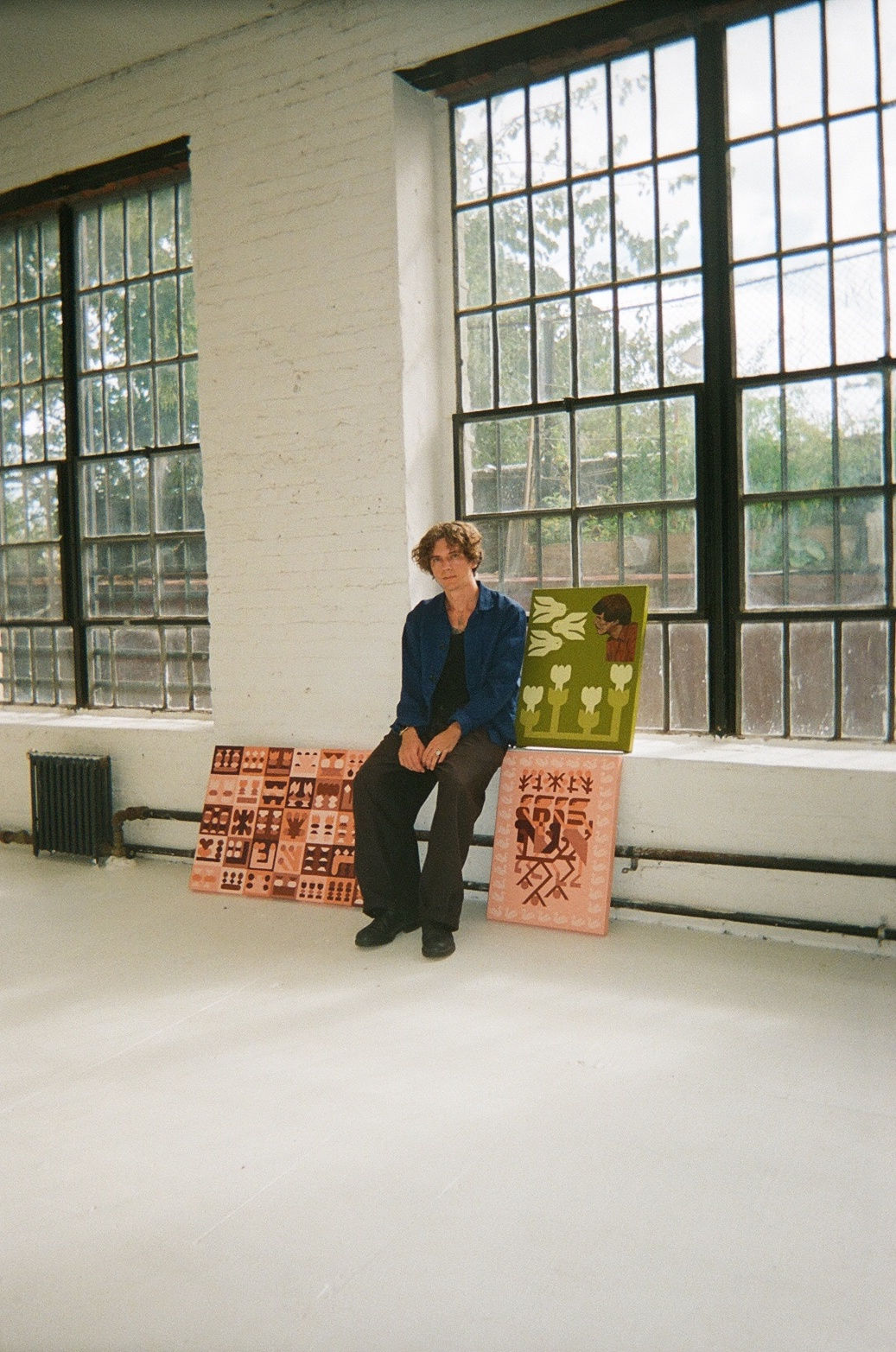
Since beginning your practice, you have worked under various monikers - Jack Fox, Cashril Plus - later deciding to go by your given name. What made you take this decision, and how does it speak to the journey of leaving behind the familiar, seeking the challenge of uncertainty and returning home with renewed understanding, that is traced throughout this exhibition?
My very early work was very inspired by my parents who were deep into graffiti, so my initial names were inspired by that. I had more street art influences and alter egos that resembled that sort of more contemporary street art scene. As I got older, I wanted to be able to give myself room to make work that was more personal. I think having my name - Keya Tama is actually my first and middle name, so there’s still a separation between myself and the work, but it is a lot more personal. It’s nice to have that and I feel I can explore many mediums without restriction.
As a multidisciplinary artist, is there a particular medium you are most drawn to, or one you are interested in exploring in the future?
So I am very inspired by ceramics. I just did a residency with the Royal Delft Museum and it reinvigorated my interest in the medium, so I am looking into doing more of that, as well as tapestry work and wood carvings. I imagine collaborating with people more and more, in multiple directions. I’m especially interested in doing more tile installations with murals and want my murals to have more three-dimensionality.
How have the various countries, cultures and artists you have interacted with throughout your life influenced your practice and the art you create?
Since a young age, I was travelling a lot because of my mum who is a muralist. I would go on these different trips and every time I felt like there was something that stayed with me. Over time you realise it was these loose links of fragments of the past, all these ephemeral things that were starting to disappear, especially art that had such warmth to it. Just as time moves fast, I’m more drawn to subtlety of the past and contrasting that with elements of contemporary design. To me that kind of balance, having a yin and yang to express something, that can hold more subtle emotions and distill them.
A large focus of The Three Goodbyes is the idea of connection, collaboration and belonging. Could you tell us about some previous collaborations, and how they have influenced the way you approach art-making?
Collaboration has been a huge part of my practice since I was young, and a huge part of that is inspired by my parents [Faith XVII and Tyler B. Murphy] who are very community focused and have grown a lot because of who they’ve collaborated with throughout their lives. It’s quite fitting that they’re both included in this show, alongside my studio-mate Kevin Cincotta and Elléna Lourens and Joshua Martel and Angel Lopez, who are such great artists. It’s quite a warm feeling having that element to the show too, to resemble these people who have meant a lot to me and influenced my practice.
How does music inform your practice? What do you typically listen to when creating work both in the street and in the studio?
Whenever I travel I always try to find old music from that area, so a lot of underground youth-culture bands that show the newness of things that exist. Besides that I listen to a lot of audio books and philosophy books - primarily Carl Jung and a lot of Murakami books. They’re really nice for encapsulating a long period of time within a project, so that you feel like there's another layer to reality. I’m really inspired by South African music too, especially since leaving, as it’s a nice way to feel connected to things that are happening.